


The Timeless Influence of Mies van der Rohe in Modern Architecture
Few architects have shaped the way we think about space, structure, and simplicity like Ludwig Mies van der Rohe. His work continues to inspire architects and designers around the world, decades after his most famous buildings were completed. Mies van der Rohe’s approach to architecture emphasized clarity, minimalism, and the honest use of materials, setting a foundation for modern design that remains relevant today.
Early Life and Architectural Beginnings
Born in 1886 in Aachen, Germany, Mies van der Rohe began his career during a time when architecture was transitioning from ornate historicism to more functional and modern forms. He apprenticed with several architects before establishing his own style. His early work reflected a move away from decoration toward simplicity, influenced by the industrial age and new building technologies.
Mies’s philosophy can be summed up in his famous phrase, “less is more.” This idea pushed architects to focus on essential elements, stripping away unnecessary details to reveal pure form and function.
Defining Characteristics of Mies’s Architecture
Mies van der Rohe’s buildings are known for several key features:
Open floor plans that create flexible, flowing spaces
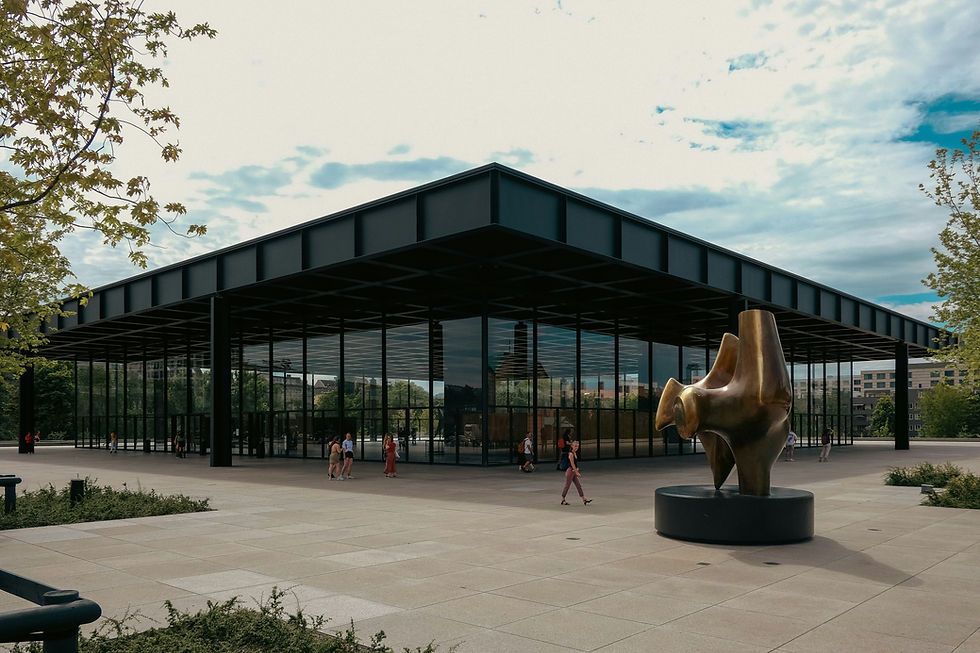
Use of modern materials such as steel and glass to achieve transparency and lightness
Emphasis on structural clarity, where the building’s framework is visible and celebrated
Minimal ornamentation, focusing on proportion and balance
One of his most iconic works, the Seagram Building in New York City, exemplifies these traits. Completed in 1958, it features a sleek steel frame and glass curtain walls, creating a sense of openness and elegance that was groundbreaking at the time.
Impact on Modern Architecture
Mies van der Rohe’s influence extends beyond individual buildings. He helped define the International Style, a movement characterized by simplicity, volume over mass, and the use of industrial materials. This style became dominant in the mid-20th century and shaped urban skylines worldwide.
His work also influenced architectural education. As the last director of the Bauhaus school before it closed in 1933, Mies promoted the integration of art, craft, and technology. His teaching emphasized the importance of design principles that remain central to architecture today.

Notable Projects and Their Legacy
Several of Mies van der Rohe’s projects stand out for their lasting impact:
Barcelona Pavilion (1929): Originally built for the International Exposition in Barcelona, this structure is celebrated for its open plan, flowing space, and use of luxurious materials like marble and onyx. It remains a symbol of modernist elegance.
Farnsworth House (1951): Located in Illinois, this glass and steel house blurs the line between indoors and outdoors. It is a prime example of minimalism and transparency in residential architecture.
Crown Hall (1956): At the Illinois Institute of Technology, this building showcases Mies’s mastery of open space and structural clarity, serving as a hub for architectural education.
These projects demonstrate how Mies’s principles can be applied to different building types, from public pavilions to private homes and educational institutions.
Why Mies van der Rohe’s Work Still Matters
The appeal of Mies van der Rohe’s architecture lies in its timelessness. His focus on simplicity and function creates spaces that feel both modern and enduring. In an era where design trends come and go, his buildings continue to feel fresh and relevant.
For architects and designers today, Mies’s work offers valuable lessons:
Design with purpose: Every element should serve a function or contribute to the overall harmony.
Embrace new materials: Use technology and materials honestly to enhance design.
Create flexible spaces: Open plans allow buildings to adapt to changing needs.
Prioritize clarity: Clear structure and form improve both aesthetics and usability.
These principles help create buildings that are not only beautiful but also practical and sustainable.
The Future of Mies’s Architectural Vision
As cities grow and environmental concerns rise, Mies van der Rohe’s ideas about simplicity and efficiency gain new importance. Architects are revisiting his work to find ways to build with less waste and more transparency.
His legacy encourages a thoughtful approach to design, where beauty comes from balance and restraint rather than excess. This mindset supports innovation while respecting the environment and human experience.
Mies van der Rohe’s architecture remains a benchmark for quality and vision. His buildings invite us to appreciate the power of simplicity and the enduring strength of well-crafted space.


Comments